Shotaology

Shota research

Wataru

Wataru and the birth of shota in mainstream anime

2020-04-04 by Karl 2 Comments

This is a summary of the rise of shota as a genre, as described in Watanabe Yumiko’s essay “Shota research” (ショタ研究), featured in Otakuology Annual 1998.

The 1981 anime Six God Combination Godmars (六神合体ゴッドマーズ) set off a male ✕ male boom and had yaoi established as a genre in the dōjinshi world.

1981 was also the year that Jump started serialising Captain Tsubasa (キャプテン翼), which is described as the very first “break” not only for yaoi but also for shota: For the first time, the female dōjinshi creators were older than their characters. In “Cappu Tsuba’s” (C翼) heyday in 1984-86, participation at Comic Market increased dramatically and women were in majority (whereas men had been in majority during the lolicon boom).

The yaoi boom peaked in 1986, when both Captain Tsubasa and Saint Seiya (聖闘士星矢) were broadcast as animes. The “male characters [made] by women boom” (女性による男性キャラブーム) was so influential that it even affected the content of Jump. However, shota was still not recognised as a genre of its own, although there were scattered series that obviously played into the burgeoning interest in young boys, such as Ganbare, kickers! (がんばれ!キッカーズ) and Mister Ajikko (ミスター味っ子).

Ikusabe Wataru shirtless in episode 11, 1988.

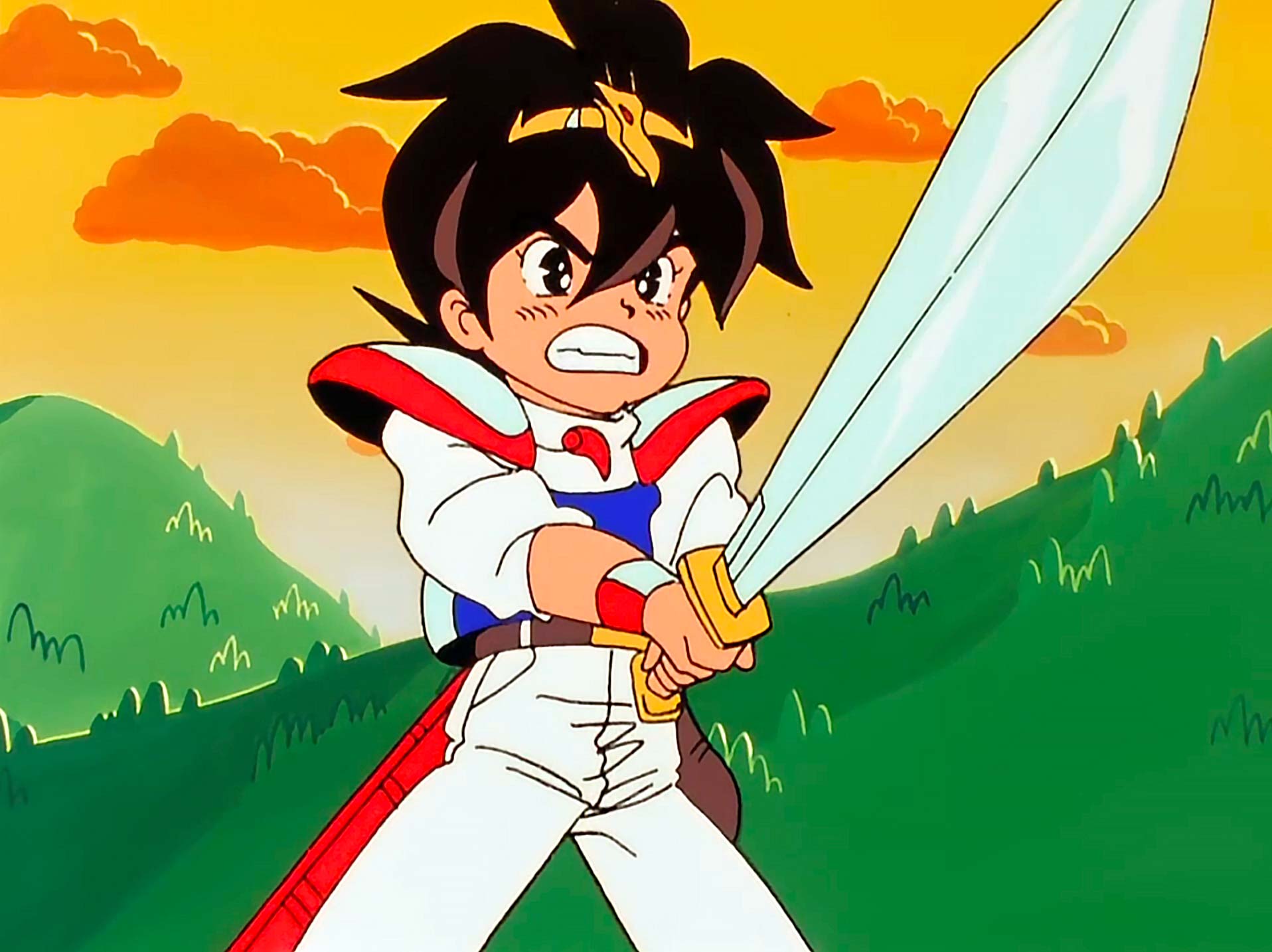
This all changed with the 1988 anime Mashin Hero Wataru (魔神英雄伝ワタル, Mashin Eiyūden Wataru), which Watanabe-san describes as a “shota trigger”. Previously, male characters had been tall and had long faces, but with Wataru, the protagonist was drawn as a cute boy with a smaller body, which was a “fresh” surprise for the viewers.

Wataru started out as a robot gag anime for children, but became an iconic shota series when Wataru’s rival Toraō (虎王) was introduced halfway through the series. (Episode 21 of 45 to be exact, as this is exactly where I am in my own watching as I’m writing this. In the English subtitles Toraō is called Tiger Prince.) The interaction between Wataru and Toraō captured the hearts of shotacons and awakened a general awareness of a “shota mind”; starting with Wataru, the “cute boy in shorts” character would become popular.

In summary, Watanabe-san argues that Wataru was the turning point that let shota break lose from yaoi and become a genre of its own.

Daichi in Mado King Granzort, 1989.

Building on the first era of shota, Wataru’s creator Sunrise Studios would continue to create robot animes aimed at children, most notably Mado King Granzort (魔動王グランゾート) from 1989.

Granzort is almost exactly like Wataru, but with amazing music, in my opinion, and Daichi is a bit older than Wataru, and he has a magic skateboard instead of magic roller skates.

Phoenix in his tanktop. Super Bikkuriman, episode 3, 1992.

Other animes that rode on the first shota wave:

  • 1990: Brave series (勇者シリーズ)
  • 1991: Matchless Raijin-Oh (絶対無敵ライジンオー) of the Eldran series (エルドランシリーズ)
  • 1992: Chō Dendō Robo Tetsujin 28-go FX (超電動ロボ 鉄人28号FX)
  • 1992: Super Bikkuriman (スーパービックリマン)
  • 1993: Nintama Rantarō (忍たま乱太郎)

Three works that attracted male shota fans

In 1994 the shota world changed in an instant by adding male fans to the female core of shota fans. This happened through these three animes:

  • Akazukin Chacha (赤ずきんチャチャ)
  • Brave Police J-Decker (勇者警察ジェイデッカー)
  • Yamato Takeru (ヤマトタケル)
Shiine-chan (left) and the more boyish boy Liya, in Akazukin Chacha, episode 2, 1994.

Akazukin Chacha was a shōjo anime, but which was watched by many non-shota men. However, the boy characters Shiine-chan, Yuuta-kun, and Loka in these series had a big effect on male shota fans, or maybe male fans in general.

What these characters had in common was something like “he’s a boy but he’s cute”, or “he is girl-like but it is in fact a boy” – which can be said to be the mysterious allure of shota. In addition, they were not hot-blooded types, but rather feminine, with healthy and cute features, which might have attracted male shota fans.

One should notice here that Watanabe-san writes about a certain kind of male shota fan. There are other male shota fans who like boys precisely because they are boyish and masculine. I think Watanabe-san’s interviewees, who call themselves “genuine” (真性) shotacons, belong to this group, and so do many of Shotaology’s readers. However, the genre’s popularity depended on a certain mainstream adoption which would not have been possible without the “male shota fans” that Watanabe-san writes about.

As shota gained clout as a genre, male shota fans founded the specialised dōjinshi event Shotaket, which had 80 circle participants and 700 general participants in 1998 – most of them men.

Shota’s momentum can be seen in the continuous spreading of hit works like:

  • 1995: Romeo’s Blue Skies (ロミオの青い空)
  • 1995: Neon Genesis Evangelion (新世紀エヴァンゲリオン)
  • 1996: Bakusō Kyōdai Let’s & Go!! (爆走兄弟レッツ&ゴー!!)
  • 1996: Detective Conan (名探偵コナン, “Case Closed”)
  • 1997: The King of Braves GaoGaiGar (勇者王ガオガイガー)
  • 1998: Bakusō Kyōdai Let’s & Go MAX (爆走兄弟レッツ&ゴーMAX)

And this was only Watanabe-san’s summary until 1998, when her essay was published! I’m not very knowledgeable in mainstream anime, but I would assume that works like Hunter ✕ Hunter show that the shota aesthetics continue to be spread and appreciated.

Maybe you can come up with more examples since 1998? Please comment!

Filed Under: Research Tagged With: Watanabe Yumiko

国際おたく大学―1998年:最前線からの研究報告

2020-04-03 by Leave a Comment

This anthology, edited by Okada Toshio, contains the essay “Shota research” (ショタの研究) by Watanabe Yumiko (渡辺 由美子), under the section “Otaku Sexuality 1” (おたくのセクシュアリティ1).

Watanabe-san’s essay is unique in that it interrogates female and male shota fans in the 1990s, while outlining the history of shota aesthetics, as well as providing an analysis of shota’s allure. I read it in great detail and used it as a springboard to watch several key animes from the 1980s and 1990s, “Mashin Eiyūden Wataru” being the most important of them.

Part 1: The history and definition of shota (p. 32-41)

Regarding the etymology of shota and shotacon, Watanabe-san mentions that there were several terms used within shōjo and shōnen-ai manga, including “ribocon” for “little boy complex”, but that the dōjinshi world eventually settled for the better sounding term “shotacon”, which first appeared in a 1981 issue of Fanroad.

Footnote 2 describes how Animecku’s editor Komaki Masanobu (小牧雅伸) and Fanroad’s editor Hamamatsu Katsuki (浜松克樹), pen name “イニシャルビスケットのK”, came up with the term. It was the lolicon boom in the early 1980s and they wondered what a male equivalent would be, for “boys in shorts” (半ズボンの少年). After Komaki dropped the hint of Kaneda Shōtarō (金田正太郎) from Tetsujin 28-gō (the original manga, not the remake which was broadcast at the time), the editors decided to call it “Shōtarō complex”, which became “shotacon”.

Watanabe-san goes on to describe how a number of mainstream boys’ anime, most importantly the “shota trigger” Mashin Hero Wataru (魔神英雄伝ワタル, Mashin Eiyūden Wataru) from 1988, awakened the “shota mind” and established shota as a new genre, separate from yaoi, among dōjinshi creators. I have summarised this development in a separate post:

Wataru and the birth of shota in mainstream anime

As for shota’s definition and age range, Watanabe-san writes that there might be as many opinions as there are shota fans. However, a shota character’s face should not have adult length, and the character must possess some kind of cuteness.

When it comes to shota characters’ personality, Watanabe-san has created a “shota gauge” (ショタゲージ), or “shotameter” in my translation, where she places the qualities “hot-blooded” vs “cool”, and “shorts” vs “skirt” on two continuums, in which she places the popular boy characters from mainstream manga and anime.

Part 2: Female shota fans (p. 42-47)

This section is a conversation between Watanabe-san and X-Kids mangaka Suō-san, who started out creating aniparo dōjinshi in high school. Starting out with Yuu☆Yuu☆Hakusho and Gundam W, both popular among aniparo creators, her taste turned towards shota with Shinji from Neon Genesis Evangelion (新世紀エヴァンゲリオン, 1995):

I didn’t think of him as shota until episode 24 when Kaworu appears, and I was like ‘What, is Shinji like that?!’. (laugh)

Suō-san

Episode 24 of Evangelion spurred a Kaworu ✕ Shinji boom among female creators, both in yaoi and shota. Kaworu’s arrival made fans realise that Shinji was a “total uke”.

Survey results from commercial shota magazines for women show that age difference, as in older/younger brother or even father/son, is the most appreciated feature among female readers. However, shota is much less strict than yaoi when it comes to the seme/uke division. If yaoi was a way for women to escape the uke role to become a seme with the power to “attack” male characters, shota is a whole different “playground” which much more open possibilities, Watanabe-san argues.

Part 3: Male shota fans (p. 48-54)

Watanabe-san begins with explaining how male shota interest emerged from the loli boom in the 1980s. Since the characteristics of loli are smooth, flat chests, and the cute style of shōjo manga, the step was not far to smooth boys. The yaoi boom made it easier for loli mangakas and publishers to experiment with boy characters, which made their ways into loli magazines like Lemon People (レモンピープル) and Hot Milk (ホットミルク). Surveys confirmed that the male readers liked “boy stuff” (少年もの). Eventually the main shota genre “big sister and me” (お姉さんと僕) emerged from this.

Watanabe-san now turns to interview Usagi-no-Tokei-san and Hakuo-san from the shota circle Shiro-usagi, and they claim to not “come from loli”:

At least, we are not shota who came from loli. Both of us were shotacons already in elementary school.

Hakuo-san

They explain how they watched robot animes as children and how they attracted to the boy heroes of animes like Triton of the Sea (海のトリトン) and Babel II (バビル二世), not to mention Kappei of Invincible Super Man Zambot 3 and Amuro of Gundam.

The most appealing thing in boys’ anime is hot friendships. When boys’ friendships are depicted in anime, it moves me and it makes me think of “something” beyond friendship. That “something” is not just friendship or affection.

Hakuo-san

Usagi-no-Tokei-san explains how he experienced “pseudo-love” between boys in elementary and middle school, and how he “got stuck in that stage” when other moved on to male-female relations. He thinks that “staying in the boy stage” is something that shotacons may have in common.

Next, Usagi-no-Tokei-san distinguishes this personal trajectory from that of shota fans who come from loli:

For people who come from loli-kei, as long as it’s smooth (tsurupeta) and cute, a boy too is okay, they seem to reason. Because only the lower body differs (laugh). Therefore they focus on the sex in their shota manga, whereas we who have been shota fans for a long time, for us the boy’s attraction is a much more special thing. That’s how I think about it.”

Usagi-no-Tokei-san

They call their thing “genuine shota” (真性ショタ), and say that there might be more of them than expected. They have set up a website where they collect impressions from other shotacons. They hope that people who find the website might feel relief that they are not the only ones with those feelings. Usagi-no-Tokei-san says that before they found fellow shotacons, they thought they were sick. Interesting here is that the Japanese word shinsei (真性) is also translated as “inborn nature”, and the literal meaning of the kanji is something along the lines of “true sex/sexuality”.

As for their relation to real (actual) boys, they keep a distance and talk about a “compromise” (割り切り). I understand this as a way to rationalise one’s inclination, “I’m ok, I’m not bad”, sort of. Hakuo-san likes 2D only, whereas Usagi-no-Tokei-san likes “2D Plus” (二次元プラス), in that he enjoys watching real (actual) boys, but that is where he draws the border.

Watanabe-san seems very surprised by the mindset of these “genuine” shota fans. She felt a strong sense of “shame”, which is non-existent for female creators who draw yaoi or loli. She observes that shota is drawn differently by men and women. In male shota, not only the seme but also the uke expresses emotions. The reason might be that male shota fans can identify with any boy character they like.

Watanabe-san mentions the recent (that is, recent in 1998) trend of youth ✕ boy (青年 ✕ 少年) couplings, which Usagi-no-Tokei-san exclaims would be “impossible”. Impossible is exactly what makes it good, Watanabe-san argues (with a laugh), and Usagi-no-Tokei-san replies:

(Laugh) I’m more like … Both when I look at shota manga and when I draw it, I immerse myself in that situation, they are not other people to me. If there is a relation between two boys, I too can feel like a boy, but if it’s a youth who does what he wants with a child, that’s a crime. It’s obscene, no matter how much 2D it is …

Usagi-no-Tokei-san

Watanabe-san concludes that for “genuine” shotacons, the boy character is used for self-identification, and that they through shota might be chasing the “imaginative boys” of their own past.

Finally, there is a discussion on homosexuality and how discrimination made it hard to say that you are attracted to your own sex, which I suppose the “genuine” shotacons are? If the word “homosexuality” was not so loaded, liking boys would be just another hobby, like “sabu-kei” (さぶ系) or “shemales” (ニューハーフ), Watanabe-san writes.

In the end, whether people are accepted or not depends on the ‘words’, as conceptual rules, that are attached to them. The fact that we have started to come out little by little is thanks to the word “shota”. I’m a shota, I’m an otaku, whatever the genre, the words attached to people do not only discriminate, but also have positive meaning, which leads to a feeling of acceptance.

Hakuo-san

Watanabe-san concludes that since “shota” is a word that spread from inside out, and wasn’t used by outsiders to discriminate, it can be used to accept, empower, and express oneself.

In the last section, Watanabe-san describes what she calls “borderless gender transformation” (性ボーダレス化):

Men turn from loli to shota, women turn to loli, in the shota world phenomena like “female Shinji” appear, whatever, whenever can be meshed together.

Watanabe Kumiko-san

However, my impression is that the “genuine” shota fans are not included in that optimistic analysis. Even so, Watanabe-san’s interview with Hakuo-san and Usagi-no-Tokei-san is indeed groundbreaking, and a great stepping stone for further research into shota and its readers.

Filed Under: Anthology, Book, Research Tagged With: shota

腐男子にきく。

2020-03-28 by Leave a Comment

This is the first study of “fudanshi” (腐男子), or “rotten boys”, originally published as a dōjinshi in 2008 by Yoshimoto Taimatsu. The term “fujoshi” (腐女子), or “rotten girls”, for women with a strong interest in BL and yaoi gained attention in 2006. Taimatsu-san turned his focus to male readers of BL and yaoi. In the words of Nagaike Kazumi:

In 2008, another male fan and critic of BL, Yoshimoto Taimatsu, self-published a study, Interviewing Fudanshi (Fudanshi ni kiku) in an initial attempt, by means of an innovative analysis of heterosexual male readings of BL, to make heterosexual male readers of BL (i.e., fudanshi or “rotten boys”) visible for the first time.

Nagaike, Kazumi. 2015. “Do Heterosexual Men Dream of Homosexual Men? BL Fudanshi and Discourse on Male Feminization.” In Boys Love Manga and Beyond: History, Culture, and Community in Japan, edited by Mark McLelland, Kazumi Nagaike, Katsuhiko Suganuma, and James Welker, 189–209. Jackson: University Press of Mississippi.

Taimatsu-san comments in the preface that the common image of straight men is that they are uninterested in, and sometimes hostile towards, homosexual imagery. Fudanshi obviously break with this homophobic tradition:

これまで男性は、同性愛者でない限り、同性愛は嫌いなのが当たり前と考えられてきた。 同性愛者は「近寄るな」と遠ざけられるか、 いいところネタとして、笑いの対象になるのがせいぜいだった。しかし「腐男子」は、嬉々 として男性同士の恋愛を楽しんでいる。いっ たい彼らはどのような性志向を持っているの だろうか?

Of particular interest is the interview with BL and shota expert Budouuri XQO-san (葡萄瓜さん), who has bought shota material “in realtime” since their appearance around 1991. Among other things, the two discuss how BL became a refuge for (straight) men who felt opressed in terms of love and sex during the bubble years, and how those men deal with the fact that the content is “homo”. As for shota research, they emphasise the importance of looking at reader letters in shota magazines.

Budouuri-san and Taimatsu-san discuss the allure of shota, and I want to quote from the interview here:

T: ただ、ショタには惹かれるものがあった のですよね。
B: ありましたね。男の子同士のふれあいは、 異性とのふれあいと少し違うかな、と言う感 覚がありました。
T: やっぱり男の子同士が一番いい、と感じ られていたのですか。
B: あくまでも男の子同士のふれあい、つながりの気分ですね。その表現としてエロもあ りと言うことで。
T: セックス先にありき、では無いわけです ね、一貫して。
B: 無いですね。

I think Fudanshi ni kiku is a unique contribution to this field, and I look forward to digging deeper into it.

Filed Under: Dōjinshi, Research Tagged With: BL, fudanshi, research, shota

妄想

What is mōsō (妄想)?

2020-03-27 by Karl Leave a Comment

The Japanese word mōsō (妄想) translates as “delusion” or “wild idea”, but it is so common in discussions on shota that I want to understand it more in depth. Exactly what does mōsō mean? I’ll provide some examples to put the word in context.

Example 1: Taimatsu-san’s chat with Budouuri-san, in Fudanshi ni kiku:

B:再解釈をどう独自に展開させるかという 工夫がありましたね。再解釈は自由でしたし。
T:今の言葉で言うと「妄想」ですね。
B:はい。ただ今とは違い、セックスして終 わり、という作品はありませんでした。
T:葡萄瓜さんもそうした妄想をしました か?
B:しましたが、形になるまでには至らずと いう感じですね。

Here “delusion” is not only used as a noun but as a verb, but as something you can do. If we depart form the verb “delude” in its literal sense “make (someone) believe something that is not true”, then to create delusions might be to venture into a world that one know isn’t “true”, and which can be enjoyed precisely therefore.

Example 2: Takeru-san explains how he uses shota, in Shota Ripōto 1:

一番の使い方は、理想や妄想を描いて表現し、伝えるための手 段です。好みのショタを、時間 や仕事など気にすることなく描いている瞬間が最も楽しいで す。

Here, Takeru-san mentions mōsō next to risō (理想) – “ideal” – which likewise is something disconnected from the actual reality. It gives the impression that mōsō is used in a much more positive way than what “delusion” usually means.

Example 3: Email interview with a shotacon

自分で描いたプロレスショタを脳内で妄想しています。

Here, my research participant uses mōsō as a verb without the を particle; mōsō shiteimasu (妄想しています) would translate to “I am delusional”, or in his case, “I am delusional in my brain”. Again, the word delusion/delusional seems too negative – it also sometimes translates to “paranoia” and being “paranoid”.

But maybe mōsō shouldn’t be understood as too positive. The negative vibe might refer to some kind of sickness or kinkiness that would be lost in more neutral words like “illusion” or simply “fantasy”. Maybe “perverted”, in a joking sense, would do the word justice?

The more I think about it, the more I like the word “delusion”. Shota lets its fans delude themselves by way of consciously creating delusions. The delusions are sick in the sense that they cannot exist outside our heads or the papers or screens that they have been transferred to. That’s why we like them – we like the sick or kinky or crazy aspect of them, and that aspect is the heart of delusions.

What do you think? I would appreciate if a native Japanese speaker and shotacon could elaborate on how they understand and use the word mōsō.

Filed Under: Research Tagged With: shota, 妄想

The Syotaroh

2020-03-26 by Leave a Comment

The Syotaroh is subtitled “syota-con magazin”, and that is exactly what this amazing book is. Mixing short comic stories, survey results, and guest contributions in the form of one-page questionnaires filled out with a pen, and laid out in an appetizing, crazy, yes passionate style, this is indeed a magazine for shotacons – published as early as August 1996.

I came across this book by way of Yoshimoto Taimatsu (吉本たいまつ), who gives it credit in his work “Another side of ショタアンソロジーを考える : 1994-1999 分析編” (yet to be reviewed). It seems to be very rare. I only found one copy which could only be bought through a flea market app with all kinds of restrictions – in the end I had a Japanese friend order it for me. But at least I got it and I’m now making my way through it, slowly and meticulously – and with joy!

The book starts – after a very sweet prologue comic – with the results of a survey taken by 82 shotacons – 63 women, 18 men, 1 okama. Their answers about their favourite age for boys (12-13), their favourite boy attributes (socks), their favourite boy characters (Romeo from Romeo no Aoi Sora/ロミオの青い空), as well as their thoughts on why they became shotacons provide a unique glimpse into this small and under-researched subculture.

I have just started reading this book and look forward to providing more details as I progress. Manda Ringo’s book seems to be a fantastic resource for shota researchers.

Filed Under: Book, Research Tagged With: research, shota

Erotic Comics in Japan

2020-03-25 by Leave a Comment

This is a book about eromanga. It contains two sections on shota: its history of shota and an analysis of its allure.

Here is an excerpt from an online review by “toumeioj3” that is slightly critical of the original Japanese version of the book:

引用されている画像はけっこうエロチックなのに、文体は非常に硬質、いささかのエロティシズムさえ寄せ付けない気配、この著者はエロマンガをどんな顔をして読んでいるのか、少し心配になった。マンガ文化に関心のある若い人には、この分野もお忘れなく、という意味でも一読をお勧めしたい好著、エロマンガを楽しんでいらっしゃる方には、無心に楽しめなくなるかもしれないので、敢えてお勧めしないでおこう。

toumeioj3 (2008)

The English translation by Patrick Galbraith and Jessica Bauwens-Sugimoto was released in 2020 by Amsterdam University Press. It contains a very helpful introduction by the translators, that helps place eromanga in the larger context of Japanese comics consumption for non-Japanese readers.

Nagayama’s book is a classic, and the entry-point for any inquiry into Japanese erotic comics. I highly recommend it. It’s available on Amazon:

  • Amazon.com
  • Amazon.co.uk
  • Amazon.ca
  • Amazon.de

Paid links: As an Amazon Associate I earn from qualifying purchases.

Filed Under: Research Tagged With: loli, shota

  • « Previous Page
  • 1
  • 2
  • 3
  • 4
  • Next Page »

My book about shota

https://www.youtube.com/watch?v=jBsDoCIyfiY
Shota Newsletter!
Join your shota friends – get notified of new posts and receive something extra in between.
No spam, unsubscribe at any time.

Book recommendations

You can find several of the books I refer to on this site on Amazon. As an Amazon Associate I earn from qualifying purchases if you use these links:

Shaman KingTakei Hiroyuki: Shaman King, vol 1–3. Takei-sensei is my favorite character designer, and if you start reading Shaman King, you’ll understand why. Available in English on Amazon.com, Amazon.ca, Amazon.co.uk.

Nagayama Kaoru: Erotic Comics in JapanNagayama Kaoru: Erotic Comics in Japan. The classic book about eromanga which both tells its history and discusses its contemporary status in Japan. Find it on Amazon.com, Amazon.co.uk, Amazon.ca, Amazon.de. (See my review here.)

Kimi Rito: The History of Hentai MangaKimi Rito: The History of Hentai Manga. The perfect complement to Nagayama’s introduction. Explores the expressions in Japanese eromanga. Find it on Amazon.com, Amazon.co.uk, Amazon.ca.

Recent posts

Gon Freecss in Hunter x Hunter shirtless

Homoerotic symbolism in Hunter × Hunter

2021-09-15

Kokoro Button: Kasuga-san and Kōga-kun! ココロ・ボタン

Call me by my first name: Intimate transgressions in Kokoro Button

2021-09-07

My own shota

My own shota

2021-08-15

What are little boys made of?

The Ontology of the Boy, or: What are little boys made of?

2021-07-27

Gokujō danshi to kurashitemasu 2

Honour culture and fictional fiction in “Help, I can’t resist the super sexy boys I’m forced to live with!”

2021-05-16

Boys with swords: Wataru, Toraoh, Yoh-kun

Young boys with big swords – phallic symbolism in Wataru and Shaman King

2021-03-15

3D shota boys

Survey: Do you like 3D shota? (3DCGショタが好きですか)

2021-03-13

Full Ahead! Coco, volume 15, cover art

Man/boy romance in Full Ahead! Coco

2021-02-27

Jumbor Angzengbang 2, ユンボル 1, manga cover art

Jumbor and the eroticism of mainstream boys’ manga

2020-12-22

車谷晴子:「極上男子と暮らしてます。」(2007)

Real shota in “Yay, I’m living with a super sexy boy!”

2020-09-22

Reference library

ショタコンのゆりかご (book cover)

ショタコンのゆりかご

Author: ぶどううり くすこ

An essay on the origins of shota, published as a dōjinshi.

国際おたく大学―1998年 最前線からの研究報告

国際おたく大学―1998年:最前線からの研究報告

Authors: 岡田 斗司夫, 渡辺 由美子

An anthology on “otakuology” that contains Watanabe Yumiko’s important shota study.

吉本たいまつ:腐男子にきく。

腐男子にきく。

Author: 吉本 たいまつ

An interview study on male fans of BL and yaoi, published as a dōjinshi.

The Syotaroh by まんだ 林檎

The Syotaroh

Author: まんだ 林檎

An impressive work on the early shota subculture.

エロマンガ・スタディーズ

Erotic Comics in Japan

Author: 永山 薫

One of the main resources on adult manga.

ショタリポート①

ショタリポート①

The first part of an interview study of shota fans.

  • X

About This Site

This may be a good place to introduce yourself and your site or include some credits.

Meta

  • Log in
  • Entries feed
  • Comments feed
  • WordPress.org