Shotaology

Shota research

エロマンガ・スタディーズ

Shota and autoeroticism

2020-09-12 by Karl Leave a Comment

I’ve just finished a close reading of the second shota section of Nagayama Kaoru’s (永山 薫) Eromanga Studies (エロマンガ・スタディーズ) from 2006. While the first section on shota (p. 83-86) covers its history and the boom of female creators in the 1990s, the second section (p. 238-44) analyses the male shota reader by way of some interesting titles. This is a translated summary of those pages.

Background

In the mid 1990s, “male characters as target for desire” in the form of “shota” appeared. In the late 1980s, a dōjinshi critic predicted that “the 1990s will be the era of cute boys”. Although this prediction was delayed due to the bishōjo-eromanga boom in the early 1990s, it turned out to be true.

At first, shota was a subgenre of BL/yaoi. Various factors made it cross the border to become a genre targeted at men. Beyond readers’ and artists’ will to read and draw, there must be a business decision that turns it into a product.

Shota oriented male writers were published in shota anthologies for women. Since it was aimed at women, censoring was not needed. So what was called “for women” on the surface in reality consisted of the three types “purely for women”, “for both sexes”, and “purely for men”. However, this boom stalled in the next decade.

But although male homosexual shota was destroyed, characters that were beautiful boys, neutral-gendered boys, cross-dressing boys, and passive “non-macho boys” spread into the world of erotic manga. Works like Yonekura Kengo’s Pink Sniper (2001) and Hayabusa Shingo’s Sweat & tears (2001) started a mini-boom of “one-shota”, with couplings between a beautiful boy and an older woman. Nagayama sees homophobia as a reason to why shota resorted to the male ╳ female scheme.

In 2002, a small boom occurred with the publication of the shota anthologies “Koushoku-shounen no susume” (2002), “Shounen-ai no bigaku” (2003), and “Shounen shikou” (2003). Shota had thereby been established as a genre, but its future is unknown.

Note: Nagayama-san’s book was published in 2006, so Budōuri Kusuko’s history of commercial shota magazines provides more details in that regard:

The rise and fall of commercial shota magazines

Boy on boy shota

Although Nagayama only discusses works aimed at men, he stresses that the coupling is basically boy on boy (少年╳少年) or youth on boy (青年╳少年), but almost never boy on youth (少年╳青年).

And in the case of boy on boy, the seme/uke roles are not always fixed.

Nagayama provides a hilarious example in the form of Yōkihi’s Asoko Kinoko (1990), in which the penises of two boys are parasitised by autonomous and intelligent mushrooms of feminine forms. These mushrooms live off the boys’ semen as nutrients, and in return provides pleasure to their hosts.
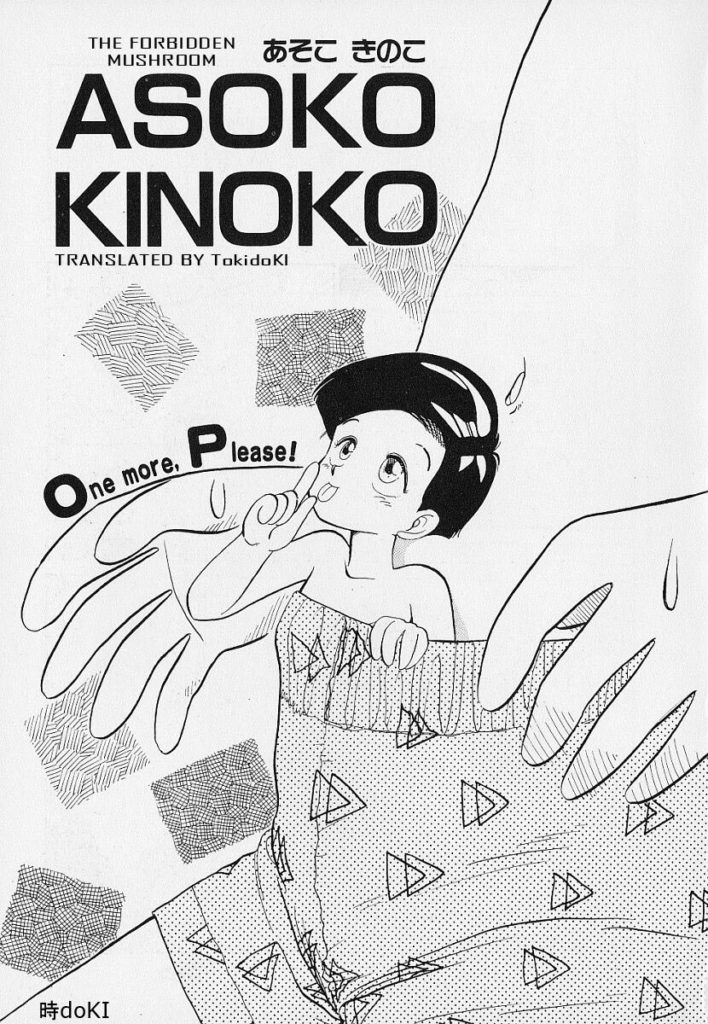
Yōkihi: The Forbidden Mushroom (1990).

In one scene the boys are kissing deeply while the “mushrooms” in their crotches are having what must be described as lesbian sex. The boys’ seme/uke roles are fluid, sometimes determined by apparent gender difference, height and physique, but only “to some extent”.

Nagayama notes that while the female mushrooms might be titillating for some, as the story progresses they retreat into the background and the boys become the full focus:

It’s a return to a boys only secret society, where sex is the homosocial company secret. Not only is there disdain, fear, and dislike for women, but maybe also fear and dislike for “the outside world”.

Nagayama Kaoru/永山 薫. Eromanga Studies/エロマンガ・スタディーズ (2006), p. 240

Male desire for boys

What kind of desire is it that male readers feel towards boy characters? Nagayama asks. Of course it could be homosexuality, conscious or subconscious. Although some shota reminds of heterosexual ero-manga in that the “uke” in the anal sex a substitute for a woman, the penis sprouting from the boy’s crotch makes it clear that we’re actually dealing with a male delight. The roles are also not that settled and the direction of power might change.

Nagayama notes that all pleasures in shota are physical pleasures. He argues that the reason why latent homosexuals fear gay porn, as represented by Tagame Gengoroh, is not that they don’t understand it, but that they understand the psychological and physical pleasures all too well. “Kawaii” suppresses such homophobia.

In other words, making the boys “cute” is a way to “de-pornify” them, since otherwise the “male pleasure” would be all too evident to the reader, which might evoke uncomfortable questions about his own homosexuality.

In addition, a major premise is that “it’s just a manga character”.

Nagayama identifies various ways in which male readers project their selves on shota characters:

  • In the case of youth on boy (青年 ╳ 少年), the gender roles are relatively fixed, which makes it easy for the male reader to project his self on the youth (the heterosexual pattern).
  • However, if the story is told from the point of view of the boy, it is easier for male readers to project their selves on an “uke” who is a boy than on an “uke” who is a woman.
  • In the case of boy on boy (少年 ╳ 少年), the feeling is the same no matter if you’re “uke” or “seme”.

In the latter case, an illusion is achieved through transformation, as Nagayama has written about in a quoted article:

I transform myself to a cute boy who does sexy things with other cute boys.

Nagayama Kaoru/永山薫: “Sexuality transformation”/セクシュアリティの変容. In Azuma Hiroki/東浩紀, editor: Mōjō genron F aratame/網状言論F改, Seidosha/青土社 collection 3/2003所収.

Nagayama asks rhetorically: Is there really such a big difference between “Cute me = an ideal model of myself” and “Cute you = an ideal model of others”? Even when this ideal model is temporarily entrusted to others, isn’t it always a projection of our self image?

No matter if the “other” that the boy is coupled with is a youth, middle-aged, or old, what we see is ourselves in various generations. In conclusion, shota is about “me and my sex”.

Two illustrative shota works

Tamamimi/たまみみ

秋緒たかみ: じゅぶないる
Akio Takami/秋緒たかみ: Juvenile/じゅぶないる BOYS SEX (2004).

Nagayama illustrates the autoerotic structure of shota through Akio Takami’s/秋緒たかみ work “Tamamimi”/たまみみ (in “Juvenile”/じゅぶないる, Shobunkan, 2004):

Terumi was missing his close friend Rōta, and was shocked to have grown cat ears the next morning. According to his grandfather’s reminiscence, if you have feelings for a person you can’t meet, you will grow “soul ears”/魂耳 which listen to that person’s presence. As Rōta too grows soul ears, the two realise that they love each other. The most beautiful thing in this work is the sequence when the soul ears are touched by “the person who thinks about them”, and they realise that it feels good, so they caress each others’ soul ears, their cheeks are blushing, and they get excited. And when the two notice each other’s hot cheeks they let their lips meet and their bodies get close.

In the sequence that goes from caressing to fucking it should be noted that the difference between the two is so thin that they are almost indistinguishable. Although the inner thoughts of the two fill the frames as narration, it is impossible to determine if it is Terumi or Rōta who utters things like “I want to touch” and “I want to be touched”. Even if the reader identifies with the story’s narrator Terumi, he can no longer tell who Terumi is.

This is an intentional manipulation by the author. As the story progresses from caressing to kissing, the two boys are drawn almost as mirror images, stressing the equal gender, but it could maybe also be read as a message about love having neither a lord nor a customer. “Tamamimi” features ideal love of the kind “you and I become one”.

Dream Users/夢使い
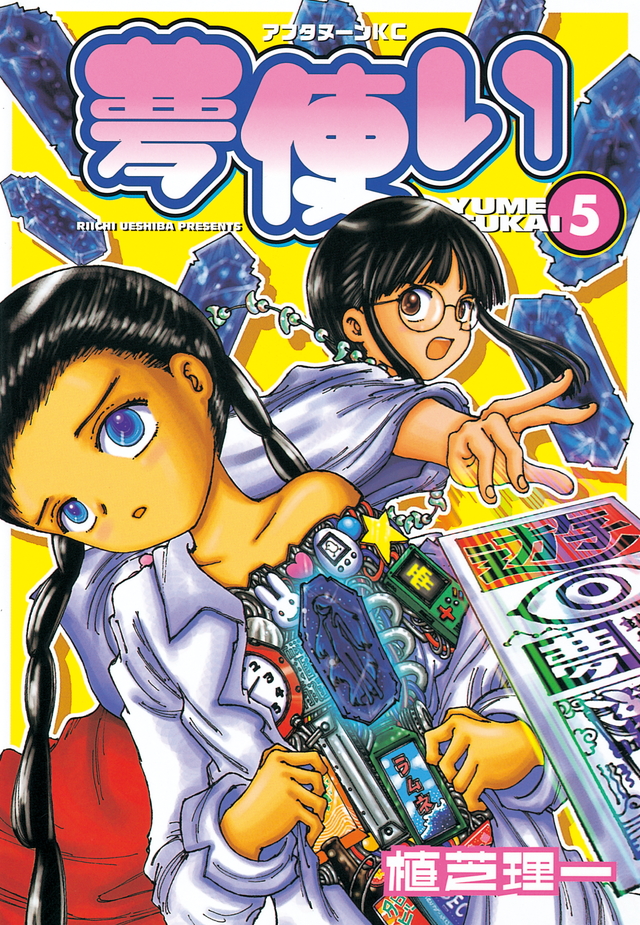
Ueshiba Riichi/植芝理一: Dream Users/夢使い (2002).

The ero-manga “Dream Users”/夢使い (Kodansha/構談社, 2002) by Ueshiba Riichi/植芝理一 shows no mercy. Cross-dressing boys lure girls to another world, where their alter egos grow penises and transform themselves into boys who rub their penises against each other. Although the manga can be seen as following the schema of “yaoi/BL”, the main focus is on “mating with myself”. As the otherness is extinguished, the unity causes a gravitational collapse towards the vanishing point of autoeroticism. We end up in the “cute me” universe with no outside world.

Boy gang rapes

Departing from “Tamamimi” (with its one-on-one coupling) and “Dream Users” (myself-on-myself), Nagayama next illustrates how individual humans don’t matter when the purpose is autoeroticism.

In the popular gang rapes of “many on one” (多数╳一人), the more “seme” that are participating, the more their individuality disappears, and the reader’s consciousness is focused on the raped boy, the “uke”. The raper squad thus turns into “a role that appeared for the sole purpose of raping cute me”.

This is the ecstacy that is at the heart of “Spitfire”/スピットファイア (Moeru Publishing, 2005) and similar stories. No matter how they are set up with boy gangs and raped boys and so on, both the “uke” and the “seme” will eventuall become “me”.

Autoeroticism and porn

Nagayama ends his analysis of the autoerotic aspect of shota by saying that it is of course only one way in which one can make sense of shota. But he argues that the position of shota is productive when trying to deconstruct ero-manga as a whole by using this keyword, and not only ero-manga for that matter, but porn in general.
Filed Under: Book, Research Tagged With: autoeroticism, Nagayama Kaoru, rape, shota, 植芝理一, 永山薫, 秋緒たかみ

まんだ林檎 The Syotaroh

Why did you become a shotacon?

2020-08-10 by Karl Leave a Comment

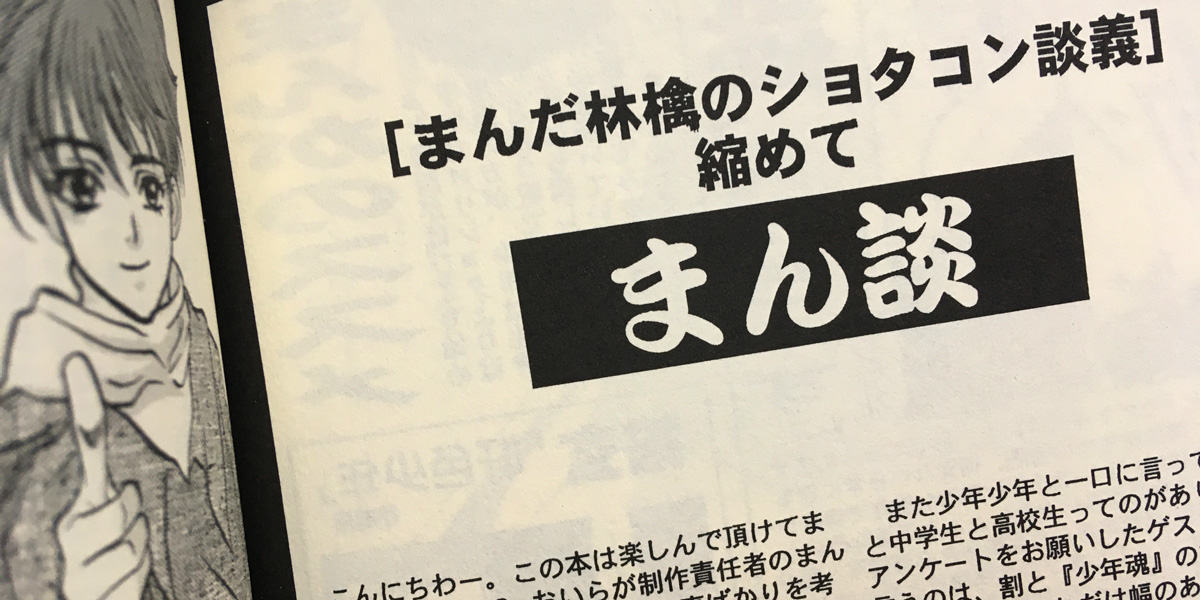
I’m reading bits and pieces of Manda Ringo’s The Syotaroh and stumbled over some quite personal passages in “Manda Ringo’s shotacon discussion” (「まんだ林檎のショタコン談義」縮めてまん談) on page 102.

After lamenting how shota recently has become synonymous with the hardcore depictions seen in eromanga, as well as elaborating on shame and being judged by society, she goes on to comment on fantasy and reality:

When I see a boy in reality, I feel no sexual desire. Well, sometimes I want to hug them close from behind. But that only happens inside my head. Real boys aren’t that sweet.

Manda Ringo (まんだ林檎), The Syotaroh, p. 102

Ringo’s view on real shota is almost identical to that of some of my research participants.

She goes on to explain why she thinks she became a shotacon:

I really wanted to become a boy. I went all in and lived that gender role. But as I grew up, my body became curvy and I became a girl. Up till middle school I almost never wore a skirt. Only shorts (半ズボン). But that started to look awkward after a while. At age 14 I had to accept that it was no good. So until 14, I was basically a boy. Of course, I didn’t consciously think of it like that, but when I have looked back later and thought about it, that’s how it was. How we think about the boy as a concept is probably influenced by such things.

Manda Ringo (まんだ林檎), The Syotaroh, p. 102

Ringo-san adds that this is why her own shota interest is directed towards boys in middle school, despite shota as such can mean boys in a rather wide age span. I also think that the sometimes traumatic events that occur around puberty heavily influence what kind of shota we come to like as adults.

What do you think? どうしてショタコンになったのか?

Filed Under: Book, Research Tagged With: Manda Ringo, まんだ林檎

ショタコンのゆりかご

2020-05-10 by Karl Leave a Comment

In ショタコンのゆりかご (shotacon no yurikago = “the cradle of shotacon”), shota expert Budōuri Kusuko (interviewed in 腐男子にきく) traces the origins of the manga genre shotacon. His focus is commercial shota magazines rather than dōjinshi.

The essay begins with a richly referenced study (first published in October 2006) into the etymology of the word shotacon, which partly relies on Watanabe Yumiko’s essay ショタの研究 (shota no kenkyū = “shota research”).

The second chapter describes “the development of shota expressions” in the 1990s, and the third chapter documents a temporary decline in the genre in the late 1990s.

The fourth and last chapter (first published in September 2007) is devoted to the development of commercial shota publications in the first years of this millennium (up until when Budōuri-san wrote his essay).

ショタコンのゆりかご is an excellent resource that provides important historical data to shota research.

A 10 page appendix with data on shota titles accompanies this essay.

An English summary of Budōuri’s findings can be found here:

The rise and fall of commercial shota magazines

Filed Under: Dōjinshi, Research

Yankee Shota to Otaku Onee-san

Real shota

2020-05-05 by Karl Leave a Comment

A scene in ヤンキーショタとオタクおねえさん (yankī-shota to otaku-onēsan ≈ yankee boy and otaku girl) by 星海 ユミ (Hoshimi Yumi) beautifully captures the sensitive subject of “real shota”.

ヤンキーショタとオタクおねえさん

The story centers around a fujoshi who a month earlier was befriended by the 11-year-old boy next door, Aikawa-kun. In the book’s first scene, Aikawa-kun insists on following the woman to a dōjinshi event (which turns out to be for BL manga) and sort of makes a fool of himself and her, so they leave immediately. In the subway on their way back the woman laments that she didn’t buy a single book because of the stupid boy. But looking at the beautiful sleeping boy next to her, it suddenly dawns on her: “This is my chance to touch a real shota!” (Devil horns!)

「これはもしやリアルショタを触るチャンスなのでは!!?」(ヤンキーショタとオタクおねえさん)

The moment is broken when their stop is announced: “We will soon arrive at Tanizaki station.” (Obviously a reference to the Japanese author 谷崎潤一郎/Tanizaki Jun’ichirō, whose books presented “a shocking world of sexuality and destructive erotic obsessions” according to Wikipedia.)

The woman gets up with the boy and says to herself: “That was close … what the hell was I doing!!!” And: “If this came out, I would be dead …”

I really liked how the manga brought up a theme that certainly occupies the mind of many shotacon. It is of special interest to me, since my research is focused on how we think about 2D and 3D realities.

A full review of this amusing series will follow!

Filed Under: Book, Commercial, Research Tagged With: 3D, Hoshimi Yumi, ヤンキー, ヤンキーショタ, リアル, 星海ユミ

Yankee manga (ヤンキー漫画)

What is “yankee shota” (ヤンキーショタ)?

2020-04-10 by Karl Leave a Comment

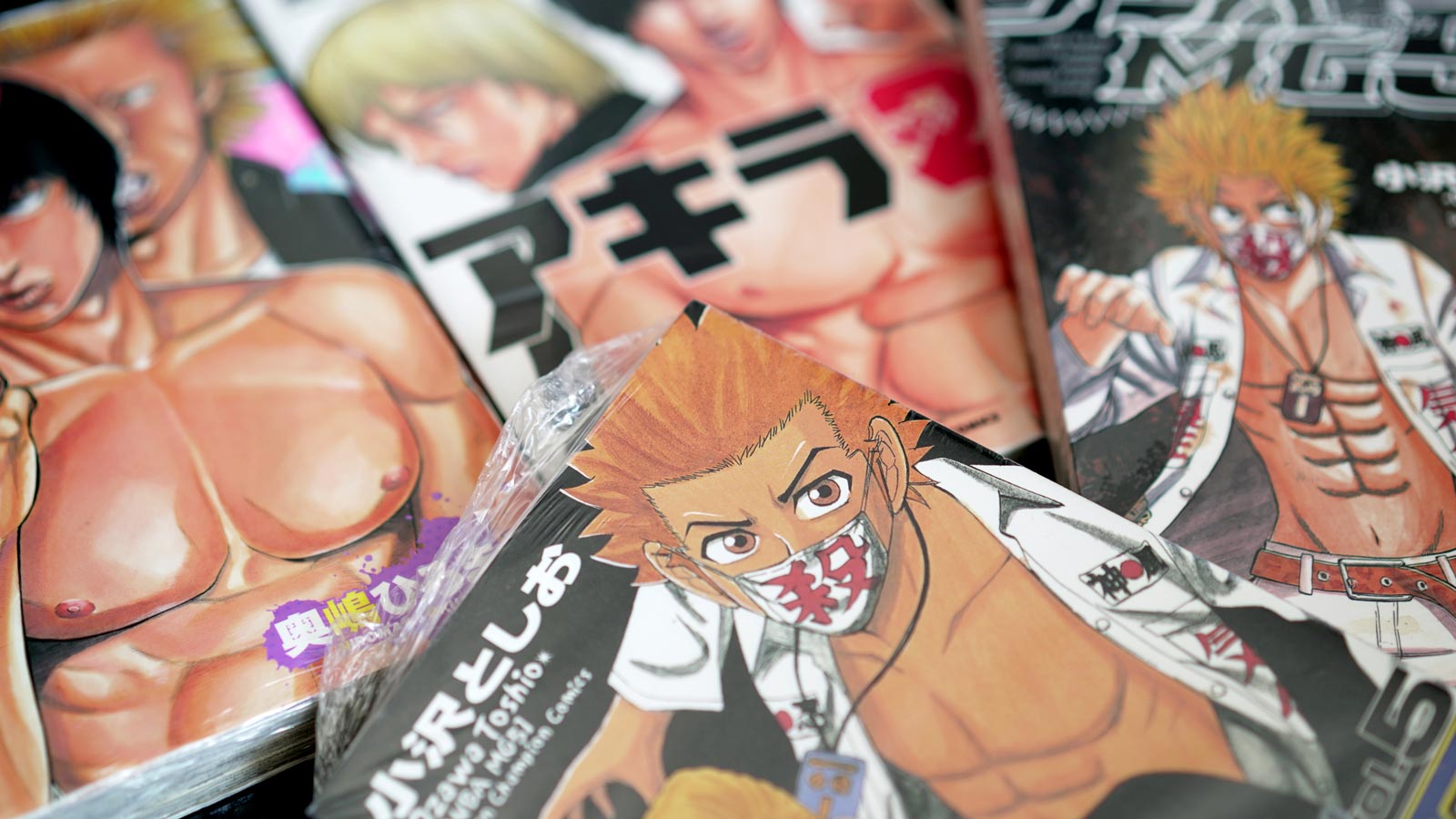
It was during one of those late-night manga hauls at Book-off that I came across a genre which I first thought was BL, but which turned out to be “yankee” (ヤンキー), or “bad boy” (不良/furyō) manga.

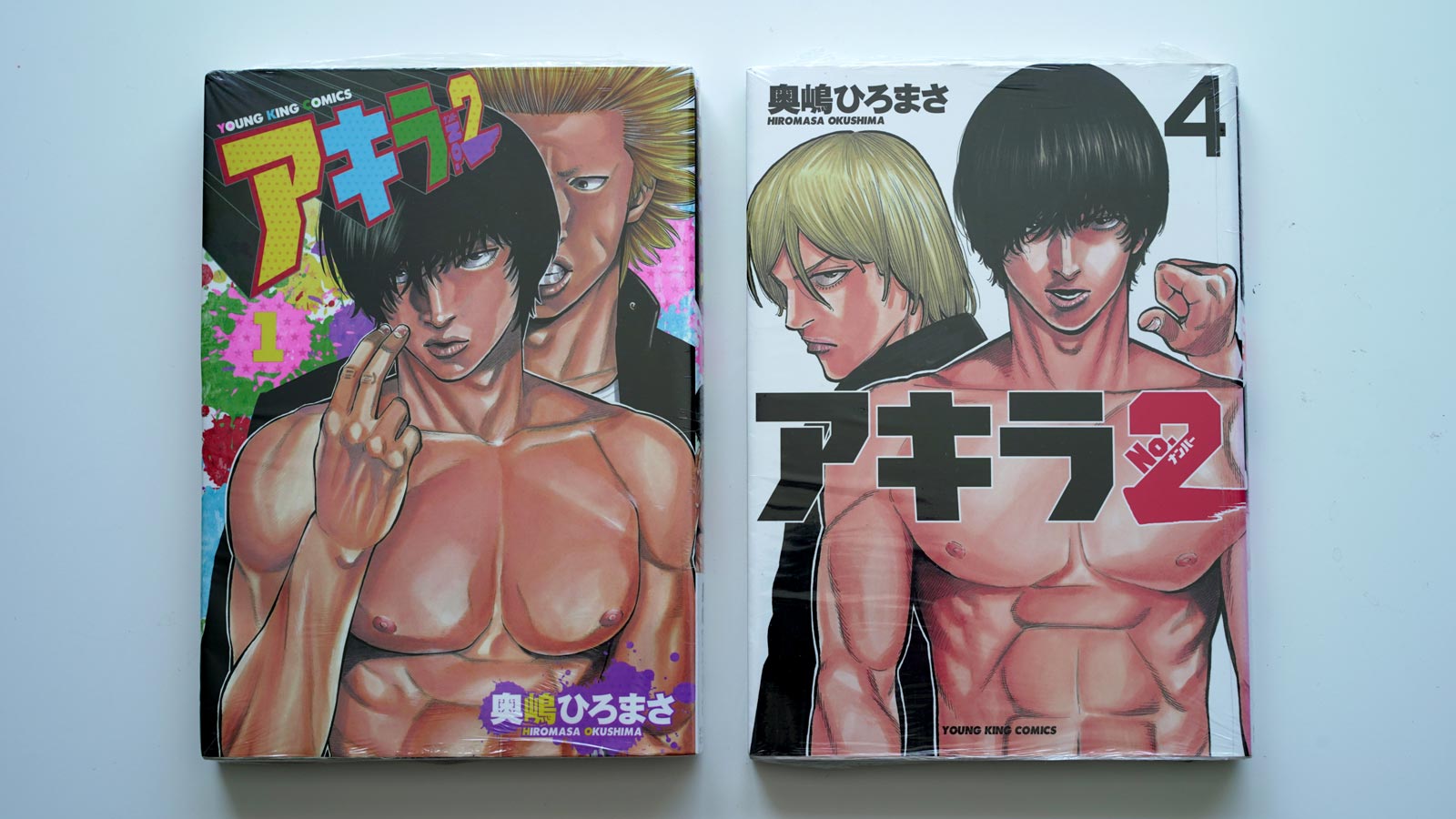
The series that caught my eyes was Akira No.2 (アキラNo.2) by Okujima Hiromasa (奥嶋ひろまさ) – and you’ll have to excuse me for thinking BL:

Akira No.2 (アキラNo.2) by Okujima Hiromasa (奥嶋ひろまさ). Cover art, volume 1 and 4.

Yankee manga is about “delinquent boys”, or 不良行為少年/furyō kōi shōnen, which according to Wikipedia is the level below actual “juvenile criminals” (虞犯少年/guhan shōnen). Rather than criminals, delinquent boys are those who roam the streets at night, who drink and smoke, and who threaten the morality of society (and themselves) in general. And yes, there are furyōshōjo too (delinquent girls).

I can understand how this genre can be enticing in Japan, where that kind of personality is not very common, at least not compared to the West, where it is rather the norm for teenagers to be a bit delinquent. That’s why it’s called “yankee”, I was told, as in boys behaving in an “American” way. (I also thought that the magazine Young King, which publishes this kind of comics, had something to do with the term, but both “young” is a common word in magazine titles.)

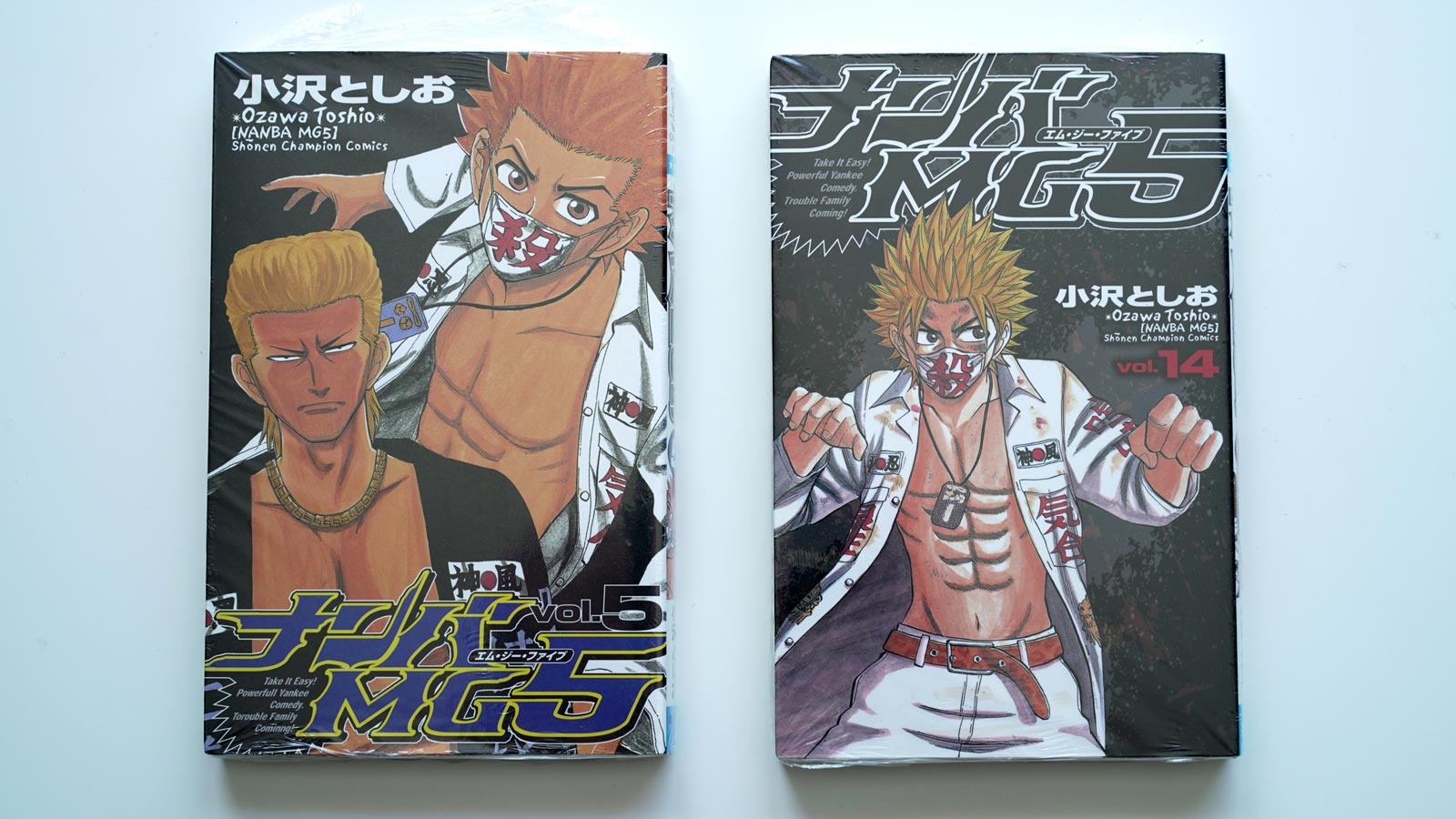
I found this ranking of the 14 best yankee manga, and realised that I also bought two volumes of Nanba MG5 (ナンバMG5) by Ozawa Toshio (小沢としお) that night at Book-off:

Nanba MG5 小沢としお
Nanba MG5 (ナンバMG5) by Ozawa Toshio (小沢としお). Cover art, volume 5 and 14.

I think this genre is not even boys’ manga, but rather seinen because of the violent content. But the blunt display of skin and muscles make it transcend into BL territory, and almost the shota variety called kinshota, or muscle shota. The hard masculinity of the characters also plays into a certain kind of shota taste, one distinct from the mainstream focus on cuteness. This is more Yabuki Joe than Ikusabe Wataru, if you know what I mean.

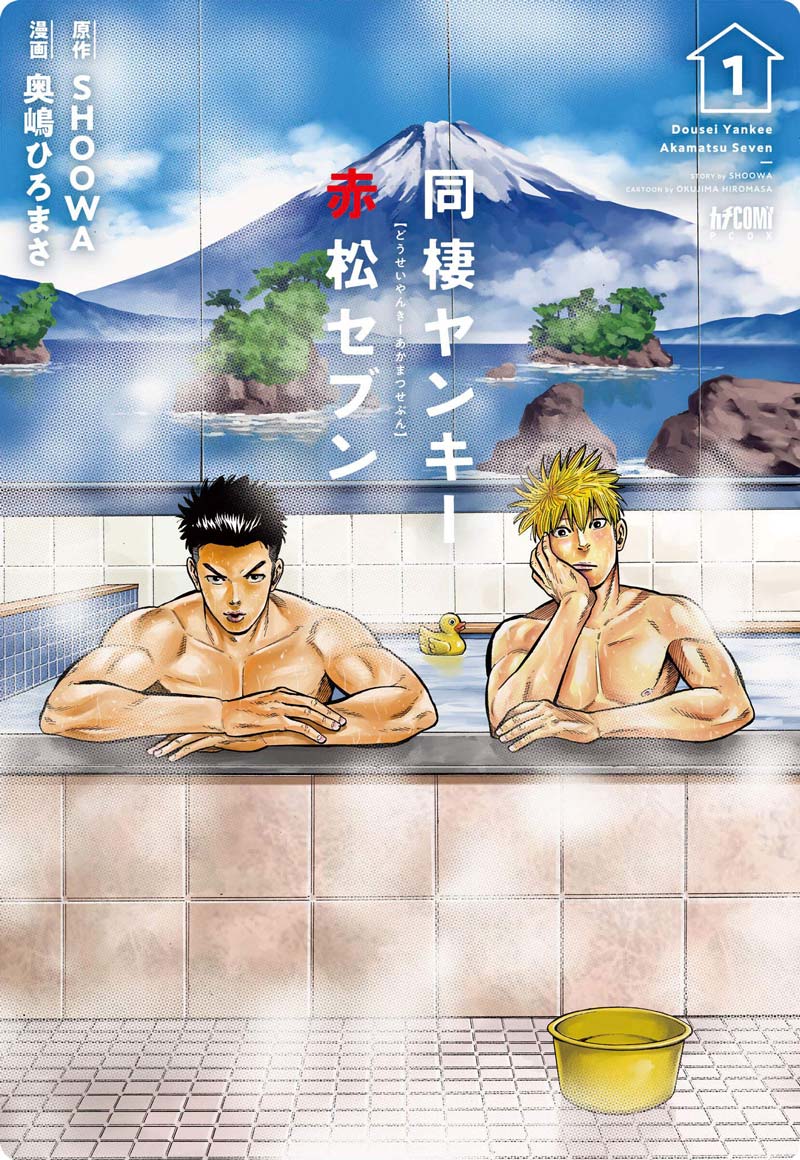
While browsing Amazon, I came across Dōsei yankī Akamatsu Sebun (同棲ヤンキー赤松セブン ≈ “cohabitation yankee Akamatsu seven”), which is written by SHOOWA and illustrated by Akira No.2 mangaka Okujima Hiromasa (奥嶋ひろまさ):

Dōsei yankī Akamatsu Sebun (同棲ヤンキー赤松セブン), cover art.

This seems like a yankee/BL cross-over, with the kanji reading for “co-habitation” (dōsei/どうせい = 同棲) being the same as that for “same sex” or “gay” (dōsei/どうせい = 同性). The fact that it is drawn by the Akira No.2 author sort of acknowledges the sexual aspect of yankee manga.

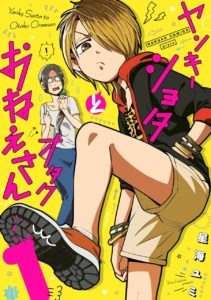
Then I came across a series called Yankī-shota to otaku-onēsan (ヤンキーショタとオタクおねえさん) by Hoshimi Yumi (星海ユミ), or “Yankee boy and otaku big sister”:

“ヤンキーショタとオタクおねえさん”, volume 1.

This boy is obviously younger, hence “shota”, but the manga doesn’t seem to be yankee per se, and not shota either for that matter, but rather trying to tap into the popularity of those genres, and of otaku culture in general, as a kind of smart and funny meta commentary. I just know that I love the cover!

I’ve also watched the first OVA of yankee anime Chameleon (カメレオン), which was quite fun.

What do you think about yankee manga? 

ヤンキー漫画についてどう考えますか?

Filed Under: Commercial, Research Tagged With: ヤンキー, ヤンキーショタ, 奥嶋ひろまさ, 星海ユミ

Manda Ringo shota survey: Ages

Twelve is the ideal shota age

2020-04-08 by Karl 1 Comment

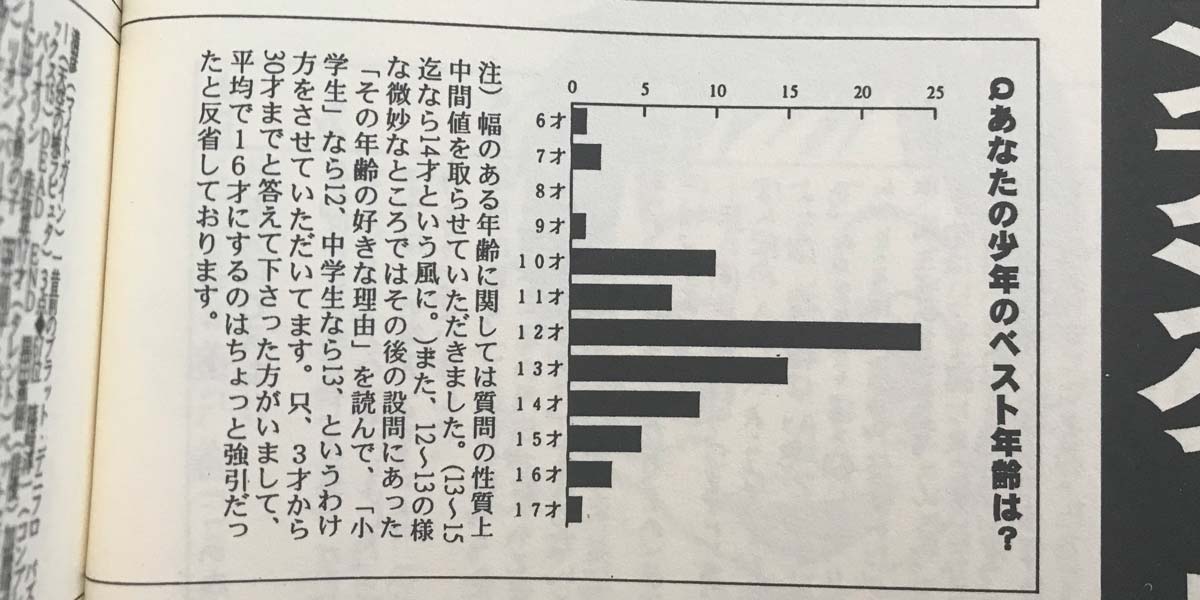
In The Syotaroh (1996) Manda Ringo surveyed almost a hundred shota fans (63 women, 18 men, 1 okama) about their favourite age for a shota character. The respondents were mainly in their late teens and early twenties.

As you can see in the graph, there was a clear preference for age 12, followed by 13, with a certain span between 10 and 14, whereas popularity drops at 15 and 16.

The ages were calculated from the age span chosen by the respondent: If someone checked 13–15, then age 14 was used in the graph. If the user checked 12–13, age 12 was used if they also chose elementary schooler, but age 13 if they chose middle schooler. The preferred ages ranged from 3 to 30, with a median of 16.

This corresponds well with the results of my own interviews, which are partly published in Shota Ripōto 1. The age spans 10–14 (仁さん/Jin-san), 9–15 (大地くん/Daichi-kun), and 11–13 (タケルさん/Takeru-san) all center on 12, whereas 勇太さん/Yuuta-san (10–15) goes halfway up to 13 and an anonymous 27-year-old man centers on 13 (10–16). シンジさん/Shinji-san centers on 14 (12–16).

Favourite age span, from Shota Ripōto 1 (2020).

What’s your favourite age of shota boys?

Filed Under: Research Tagged With: Manda Ringo, まんだ林檎

  • « Previous Page
  • 1
  • 2
  • 3
  • 4
  • Next Page »

My book about shota

https://www.youtube.com/watch?v=jBsDoCIyfiY
Shota Newsletter!
Join your shota friends – get notified of new posts and receive something extra in between.
No spam, unsubscribe at any time.

Book recommendations

You can find several of the books I refer to on this site on Amazon. As an Amazon Associate I earn from qualifying purchases if you use these links:

Shaman KingTakei Hiroyuki: Shaman King, vol 1–3. Takei-sensei is my favorite character designer, and if you start reading Shaman King, you’ll understand why. Available in English on Amazon.com, Amazon.ca, Amazon.co.uk.

Nagayama Kaoru: Erotic Comics in JapanNagayama Kaoru: Erotic Comics in Japan. The classic book about eromanga which both tells its history and discusses its contemporary status in Japan. Find it on Amazon.com, Amazon.co.uk, Amazon.ca, Amazon.de. (See my review here.)

Kimi Rito: The History of Hentai MangaKimi Rito: The History of Hentai Manga. The perfect complement to Nagayama’s introduction. Explores the expressions in Japanese eromanga. Find it on Amazon.com, Amazon.co.uk, Amazon.ca.

Recent posts

Gon Freecss in Hunter x Hunter shirtless

Homoerotic symbolism in Hunter × Hunter

2021-09-15

Kokoro Button: Kasuga-san and Kōga-kun! ココロ・ボタン

Call me by my first name: Intimate transgressions in Kokoro Button

2021-09-07

My own shota

My own shota

2021-08-15

What are little boys made of?

The Ontology of the Boy, or: What are little boys made of?

2021-07-27

Gokujō danshi to kurashitemasu 2

Honour culture and fictional fiction in “Help, I can’t resist the super sexy boys I’m forced to live with!”

2021-05-16

Boys with swords: Wataru, Toraoh, Yoh-kun

Young boys with big swords – phallic symbolism in Wataru and Shaman King

2021-03-15

3D shota boys

Survey: Do you like 3D shota? (3DCGショタが好きですか)

2021-03-13

Full Ahead! Coco, volume 15, cover art

Man/boy romance in Full Ahead! Coco

2021-02-27

Jumbor Angzengbang 2, ユンボル 1, manga cover art

Jumbor and the eroticism of mainstream boys’ manga

2020-12-22

車谷晴子:「極上男子と暮らしてます。」(2007)

Real shota in “Yay, I’m living with a super sexy boy!”

2020-09-22

Reference library

ショタコンのゆりかご (book cover)

ショタコンのゆりかご

Author: ぶどううり くすこ

An essay on the origins of shota, published as a dōjinshi.

国際おたく大学―1998年 最前線からの研究報告

国際おたく大学―1998年:最前線からの研究報告

Authors: 岡田 斗司夫, 渡辺 由美子

An anthology on “otakuology” that contains Watanabe Yumiko’s important shota study.

吉本たいまつ:腐男子にきく。

腐男子にきく。

Author: 吉本 たいまつ

An interview study on male fans of BL and yaoi, published as a dōjinshi.

The Syotaroh by まんだ 林檎

The Syotaroh

Author: まんだ 林檎

An impressive work on the early shota subculture.

エロマンガ・スタディーズ

Erotic Comics in Japan

Author: 永山 薫

One of the main resources on adult manga.

ショタリポート①

ショタリポート①

The first part of an interview study of shota fans.

  • X

About This Site

This may be a good place to introduce yourself and your site or include some credits.

Meta

  • Log in
  • Entries feed
  • Comments feed
  • WordPress.org